
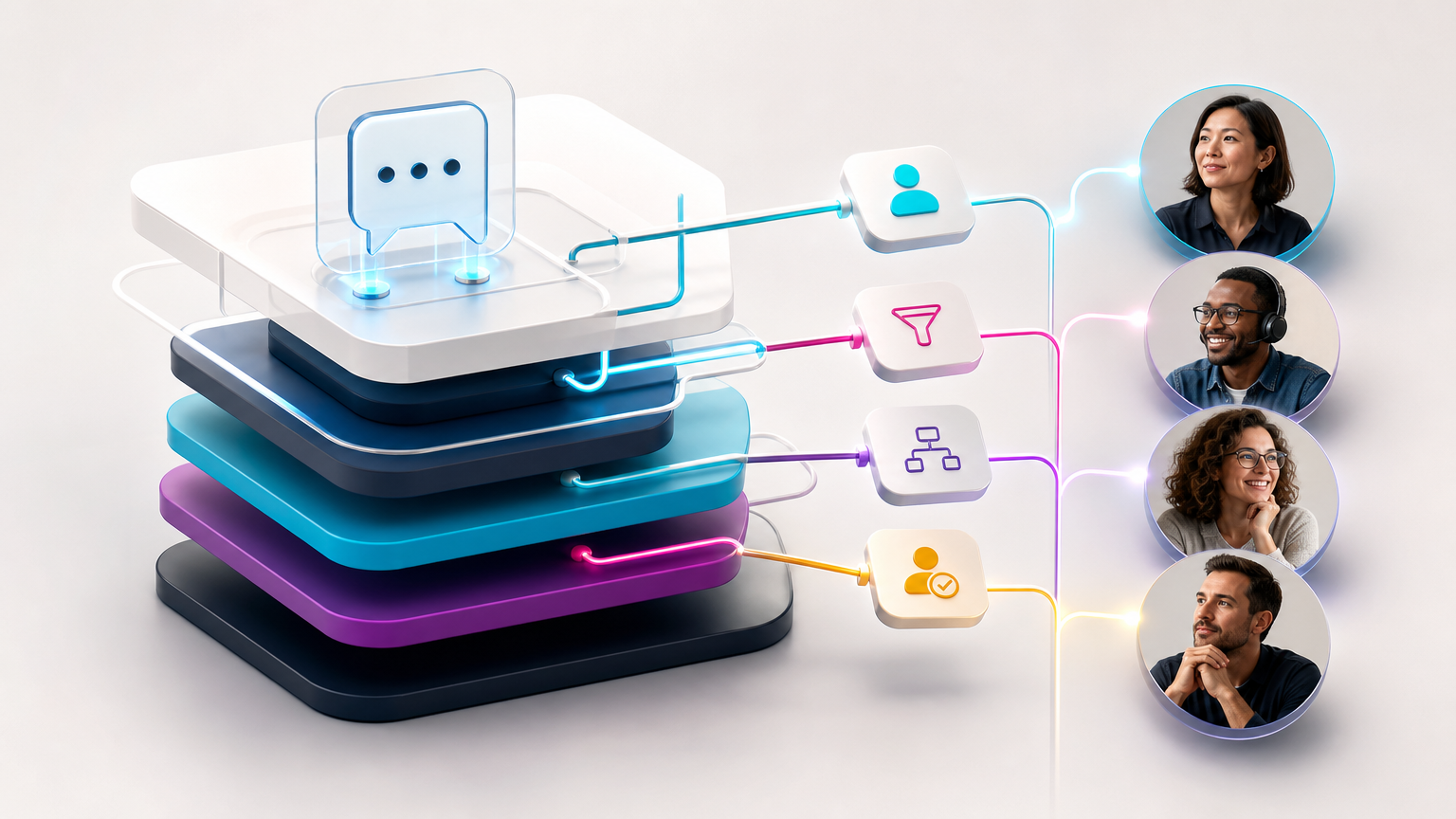
AI chatbots can help qualify leads and drive traffic, but only if they do more than greet visitors.
A chatbot that asks random questions is a form with a personality. A useful assistant understands the buyer's intent, captures the right context, and routes the next step.
Traffic is not enough
Website traffic only matters when the site can turn attention into a useful conversation.
Visitors arrive with different needs:
- pricing or fit
- service questions
- implementation concerns
- support requests
- partnership interest
- career or investor questions
The chatbot should identify the path quickly instead of treating every visitor the same.
Qualification should feel helpful
Lead qualification works best when it feels like guidance, not interrogation.
The assistant can ask what the visitor is trying to improve, what tools are involved, who owns the workflow, and what timeline matters. Then it can summarize the need and suggest the next step.
That is better than forcing someone through a long static form.
Connect chat to follow-up
The value of an AI chatbot is lost if the conversation dies after the visitor leaves.
The system should capture the summary, route the lead, draft follow-up, and make sure the human owner knows what was discussed. This is where the Business Brain matters. It connects the website conversation to sales, support, content, and operations instead of leaving it as isolated chat history.
Know when to hand off
Chatbots should not negotiate pricing, make sensitive promises, or handle unusual edge cases alone. They should qualify, clarify, and route.
The best lead chatbot is honest about its role. It helps the buyer get oriented and helps the team respond with context.
That is how AI chat becomes a growth workflow, not a novelty widget.