

Start with audience understanding
A synthetic spokesperson may appear in a campaign, explainer, product demonstration, customer interaction, or entertainment-style format. Whatever the format, the central editorial question is straightforward: what is a reasonable audience likely to believe about the speaker?
If viewers could reasonably understand a synthetic character to be a human being, an independent expert, or a real customer, the organization behind the content should consider whether that impression is accurate and whether the presentation explains the speaker’s nature clearly enough.
This is not only a production question. It is a question of trust. A polished voice, realistic face, or conversational response can create expectations about identity, authorship, expertise, and accountability. Those expectations should not be left entirely to inference.
Make the disclosure plain and relevant
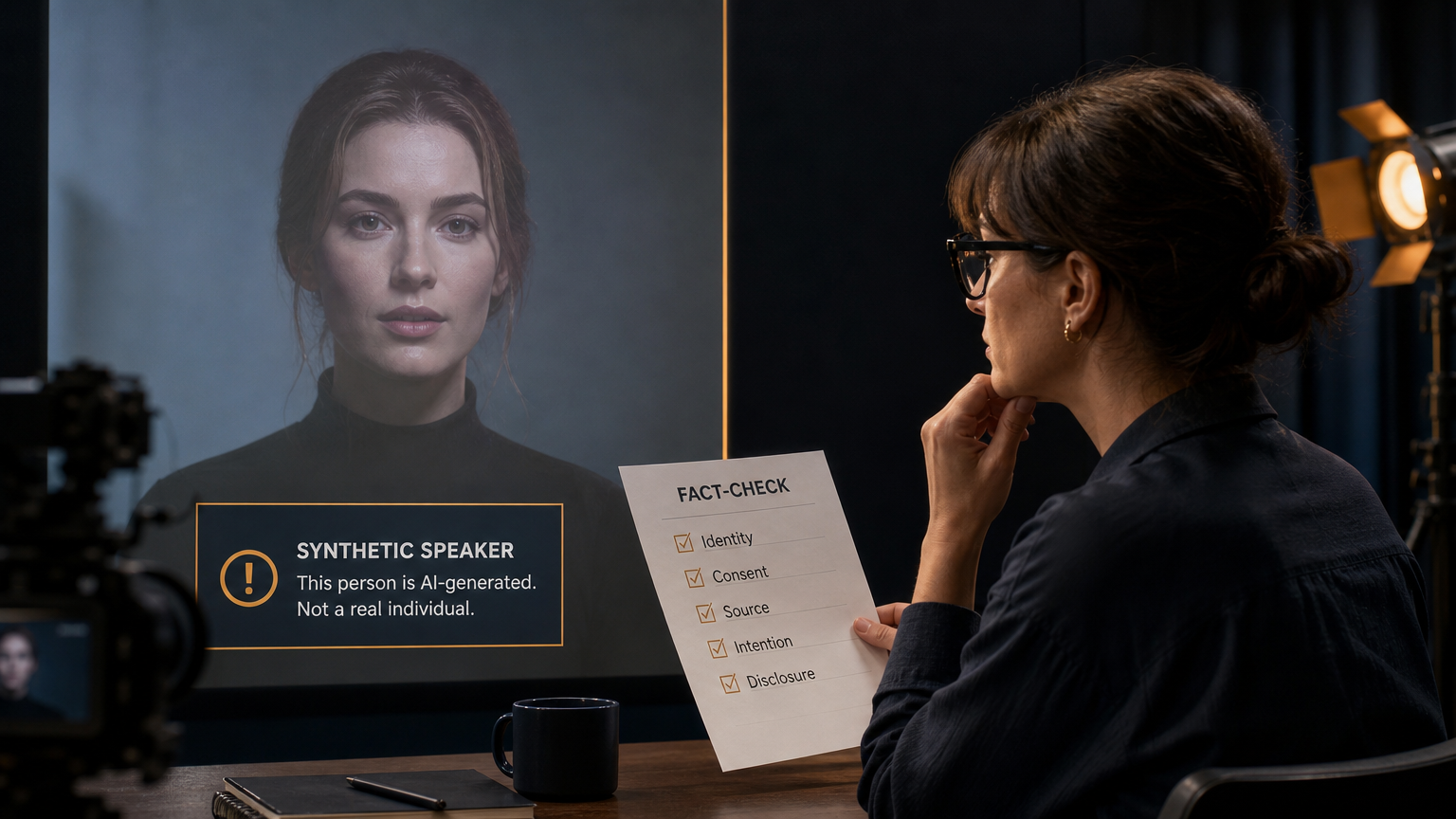
A useful disclosure does more than use a broad technical label. It helps the audience understand the aspect of the presentation that matters.
Depending on the content, a disclosure may need to clarify:
- whether the presenter is a fictional synthetic character or represents a real person;
- whether the face, voice, dialogue, or all of the persona is synthetic;
- which organization is responsible for the message; and
- whether people reviewed the published claims and presentation.
For example, an organization might use language along these lines:
“This presentation features a fictional synthetic spokesperson. [Organization] is responsible for the message and reviewed the published content.”
That wording is an adaptable editorial example, not a universal formula. A short social post, a live interaction, a broadcast segment, and a regulated customer communication may call for different treatment.
Placement matters as much as wording. When practical, disclosure should appear early enough for the audience to understand the nature of the speaker before encountering a material claim, recommendation, or call to action. Content is often clipped, reposted, embedded, or viewed without its original caption. A disclosure that exists only on a profile page or at the end of a video may not remain connected to the content when it travels.
Distinguish fictional characters from representations of real people
Not every synthetic identity presents the same set of considerations.
A fictional character is designed and presented as an invented persona. A synthetic representation of a real person may raise additional issues around identity, likeness, voice, performance, endorsement, contractual permissions, and audience interpretation.
Before publishing material that resembles, references, or is associated with a real person, an organization can ask:
- Is the content likely to be understood as depicting or speaking for a real person?
- What permissions or agreements govern the intended use?
- Does the planned distribution fit the scope of those permissions?
- Could the presentation imply an endorsement, affiliation, or personal statement that is not intended?
- Who is responsible for reviewing the final version before distribution?
These are operating questions, not determinations of legal rights. The answers can vary substantially based on the people involved, the content, the place of publication, contractual terms, and applicable rules.
Treat conversational formats with added care
An interview, question-and-answer session, or interactive exchange can signal spontaneity and independence to an audience. That makes context especially important when the speaker is synthetic or when an organization controls the conditions of the exchange.
A responsible editorial review may consider whether the audience can tell:
- whether the speaker is fictional, synthetic, or based on a real person;
- whether responses are prepared, generated during the interaction, selected, or edited;
- who controls the character and distribution channel;
- who reviewed factual statements before publication; and
- where an audience member can find clarification or raise a concern.
The goal is not to eliminate creative formats. It is to avoid presenting controlled or generated material in a way that suggests independence, personal experience, or verification that the format does not support.
Keep an internal editorial record
Public disclosure should be understandable to an audience. Internal documentation serves a different purpose: helping the publishing organization account for what it released.
A proportionate record for a public-facing synthetic spokesperson may include:
- the identity of the organization and named owner responsible for the content;
- a description of the synthetic asset and its intended role;
- the rights, permissions, or source information relevant to the planned use;
- the version published and the publication date;
- the final script or core claims where applicable;
- material editorial edits and approvals;
- the disclosure language used; and
- the channels and intended audience for distribution.
The record need not reveal confidential production methods. Its practical value is accountability. If a claim, identity presentation, or disclosure is challenged, the organization should be able to determine what was published, who approved it, and what context accompanied it.

Assign human responsibility for the message
A synthetic spokesperson can deliver a message, but it cannot remove the publisher’s responsibility for that message.
A named human owner can be accountable for decisions such as:
- whether the use of a synthetic identity is appropriate for the communication;
- whether disclosures are clear in the relevant format;
- whether substantive claims have received appropriate editorial review;
- whether the portrayal could confuse audiences about identity or endorsement; and
- how concerns, corrections, or complaints will be handled.
This is particularly important when content addresses health, finance, safety, employment, public affairs, or other subjects where audience reliance may carry higher consequences. The necessary level of review should be matched to the context and potential impact.
A practical pre-publication discussion
Before releasing a synthetic spokesperson campaign or interaction, teams can use the following questions as a working discussion:
1. What will the audience think the speaker is?
Describe the likely audience impression without technical jargon. If the answer is unclear, the presentation or disclosure may need refinement.
2. What information should be visible at first exposure?
Identify the minimum context an audience needs to understand the speaker’s synthetic nature and the organization behind the message.
3. Does the content involve a real person’s identity or performance?
If so, identify the relevant permissions, limits, and review responsibilities before publishing.
4. Who owns the factual and editorial judgment?
Name the person or team responsible for approving claims, context, and final distribution.
5. What happens when the content is separated from its original setting?
Consider clips, reposts, screenshots, embeds, and alternate device views. Make disclosure resilient where practical.
6. Can the organization explain the final presentation?
An accountable publisher should be able to describe what the audience saw, why the format was used, and who approved it.
Transparency supports durable creative work
Synthetic media can be used for storytelling, accessibility, education, brand communication, and other creative purposes. But realism should not become a reason to obscure authorship or responsibility.
The strongest starting point is not whether a synthetic person can look or sound convincing. It is whether the audience receives enough context to understand the presentation and whether a human organization remains visibly accountable for the message.
Clear disclosure, proportionate documentation, and named editorial ownership are practical ways to build that accountability into the work from the beginning.