
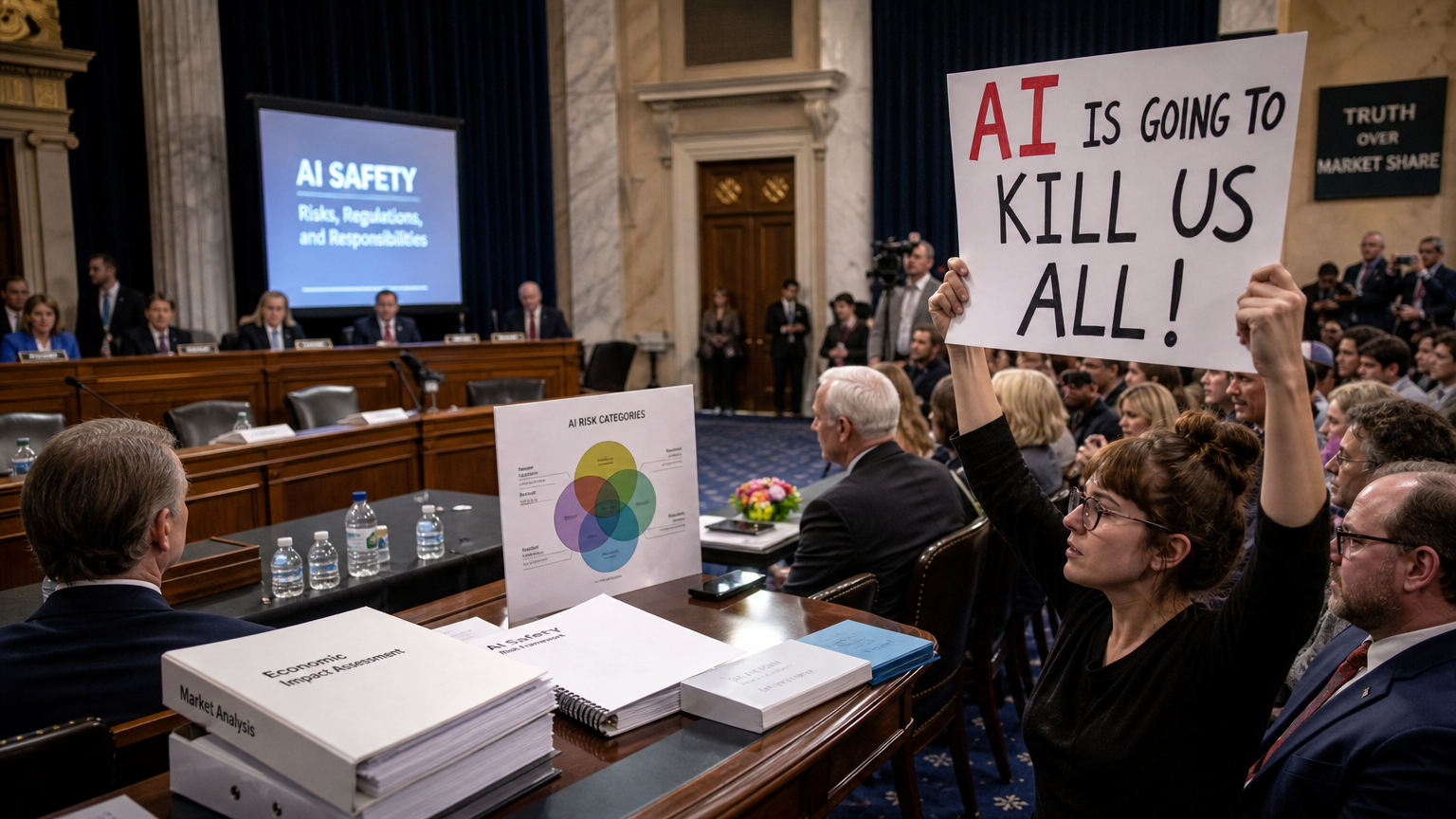
People who fear that AI could harm humanity are often presented with two unsatisfying choices: trust the companies building it, or assume that every warning is a manipulation campaign. Neither response is adequate.
A more useful question is: what incentives sit behind each public claim about AI? Safety warnings may reflect genuine concern. They may also support a company's preferred regulatory framework, slow competitors, protect an investment, reduce legal exposure, or create time to improve a product. Several motives can exist at once. The presence of a financial incentive does not prove that a warning is false, but it does mean the warning should be examined rather than accepted on authority.
What the money argument gets right—and what it cannot prove
Technology companies do not operate outside markets. Their leaders answer to investors, employees, customers, regulators, and competitors. A public call to slow AI development could benefit an established company if it raises the cost of entry, delays rivals, or shifts competition from rapid product releases toward areas where the established company has an advantage.
That is a legitimate incentive to investigate. It is not, by itself, evidence of a coordinated deception or a deliberate attempt to make the public afraid. The claim that AI safety warnings are mainly a strategy to protect profits requires specific evidence: internal communications, lobbying records, policy proposals, financial analysis, or a consistent link between the warning and a company's commercial advantage.
The same caution applies in the other direction. A company can have commercial interests and still identify a real danger. A business may seek regulation that helps its position while also raising a genuine safety issue. Treating motives as mutually exclusive makes the analysis weaker.
A practical test is to separate four questions:
- What risk is being described? Is it misuse, fraud, labor displacement, concentration of power, privacy loss, autonomous action, or a long-term catastrophic scenario?
- What evidence supports the risk? Distinguish observed incidents from forecasts, scenarios, and speculation.
- What intervention is being requested? A pause, licensing system, transparency requirement, liability rule, security standard, or something else?
- Who gains power from that intervention? Examine both the stated public benefit and the distribution of commercial and political advantage.
This approach does not require trusting industry leaders. It requires asking them to show their work.
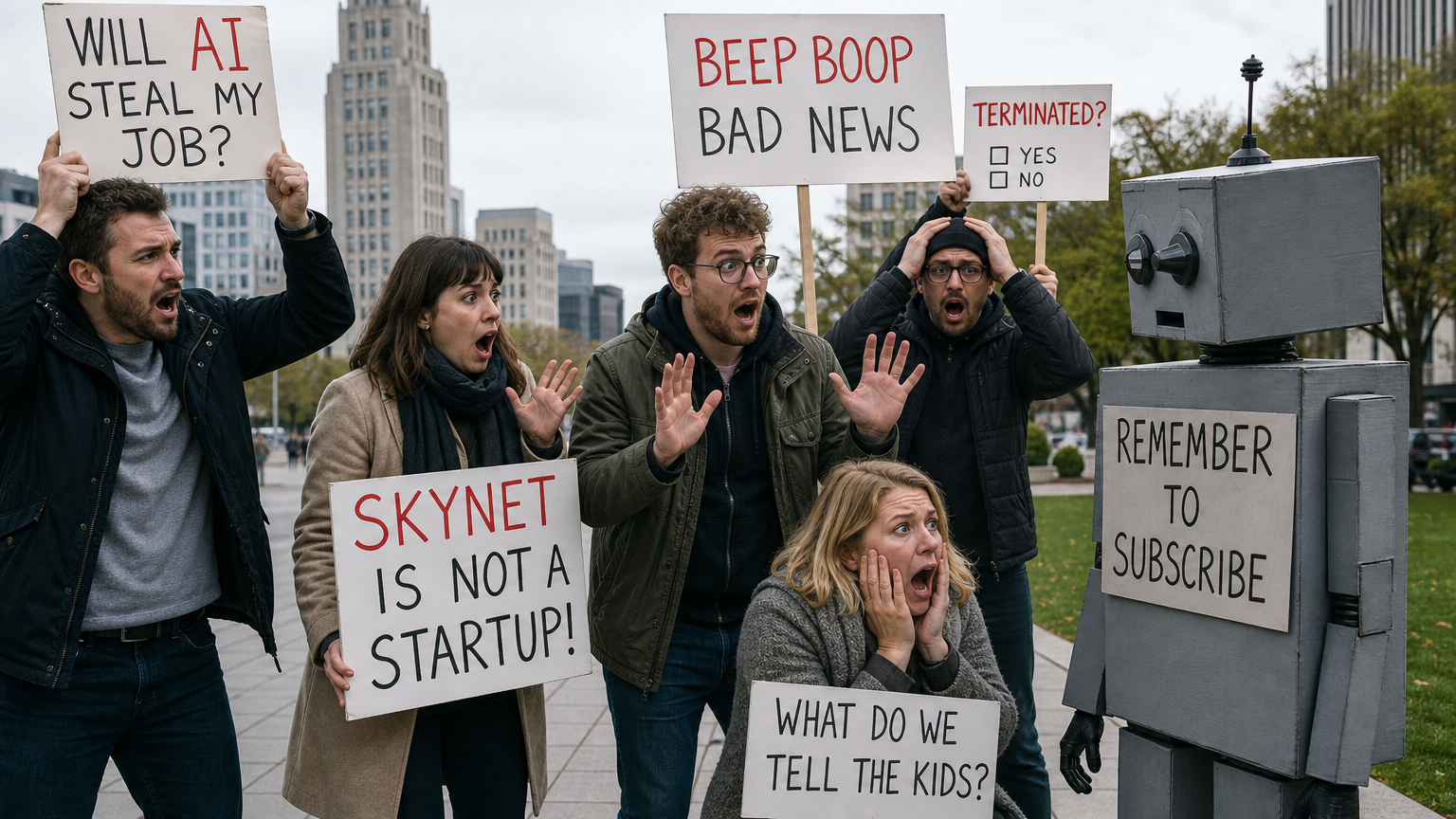
Fear can distract from risks we can already evaluate
Public debate often jumps directly to whether AI will “kill us all.” That framing creates a false binary. A person can reject apocalyptic certainty while taking present harms seriously.
AI systems can affect employment decisions, access to services, personal data, customer support, education, journalism, and public information. The relevant questions are concrete: Was a person informed that an automated system was involved? Can they challenge an error? Who is liable when a system causes harm? Is sensitive data being used without meaningful consent? Can an organization audit the system rather than relying on a vendor's assurances?
These questions are less dramatic than extinction scenarios, but they are easier to test. They also matter because power can accumulate gradually. A society does not need to lose control in one cinematic event for people to have less privacy, bargaining power, or freedom of choice.
That is why “the technology will save us” is no more sufficient than “the technology will destroy us.” Both claims can turn a political and economic question into a prophecy. The important issue is who controls the systems, under what rules, and with what recourse for everyone affected.
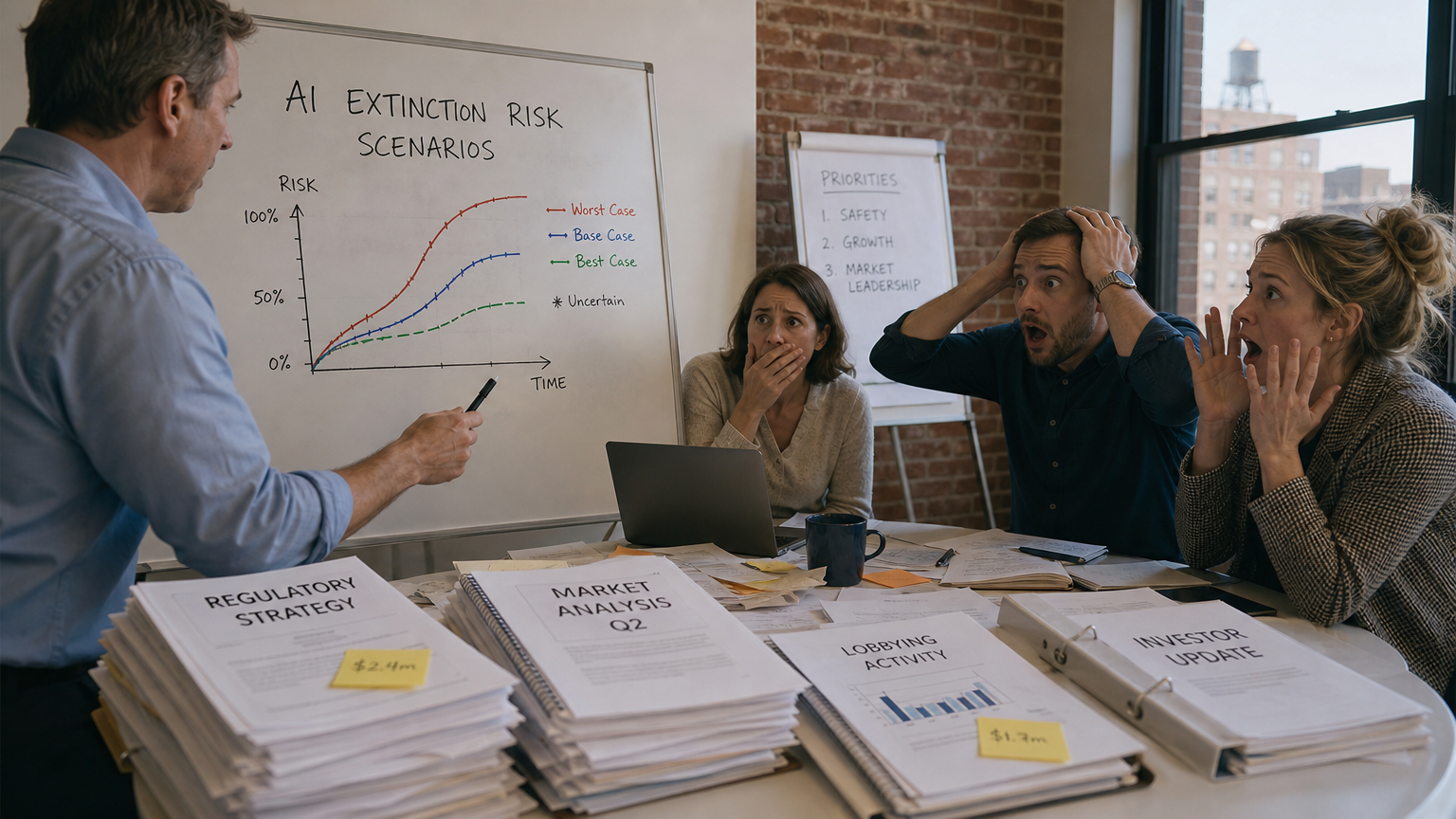
AI and the meaning of freedom
There is a credible case for treating AI as a tool that could reduce repetitive computer work and give people more time for creative, interpersonal, or physical activity. But that outcome is not automatic. If productivity gains are controlled by a small number of companies, the result may be greater surveillance or work intensification rather than greater freedom.
Freedom requires more than access to a powerful tool. It also requires the ability to understand how the tool affects you, refuse it in important contexts, move between providers, protect your data, and challenge decisions made with its assistance. It requires institutions that can investigate misconduct and impose consequences.
A useful SimplSolutions framework is capability, control, and consent:
- Capability: What can the system actually do, and how reliable is it in the relevant setting?
- Control: Who owns the infrastructure, sets the rules, updates the model, and can shut it down?
- Consent: Do affected people know how it is being used, and do they have a meaningful alternative or appeal?
This framework moves the conversation away from vague faith or panic. It also clarifies what public discussion should focus on. If an AI product promises freedom, ask whether it increases the user's control—or simply makes the user dependent on a new intermediary.
How to discuss AI without becoming an amplifier for anyone's agenda
The strongest response to an alarming claim is not to repeat it more loudly. It is to make the claim specific enough to investigate.
When you encounter a warning about AI, look for the original statement, the evidence cited, the policy being requested, and the speaker's incentives. Compare the warning with independent research and documented incidents. Be especially cautious when a speaker presents only two choices: immediate deployment or civilizational collapse, unconditional trust or total conspiracy.
Conversations matter, but responsible conversation includes uncertainty. Say what is known, what is plausible, and what remains unverified. That makes it harder for companies, governments, commentators, and online communities to use fear as a substitute for accountability.
The next step is to discuss AI in public using evidence and specific questions—not deference, panic, or slogans. Ask who benefits, who bears the risk, who can appeal a decision, and what would count as proof that a proposed safeguard works. AI may become a meaningful tool for human freedom, but that outcome will depend on human choices about power, ownership, and rights.