
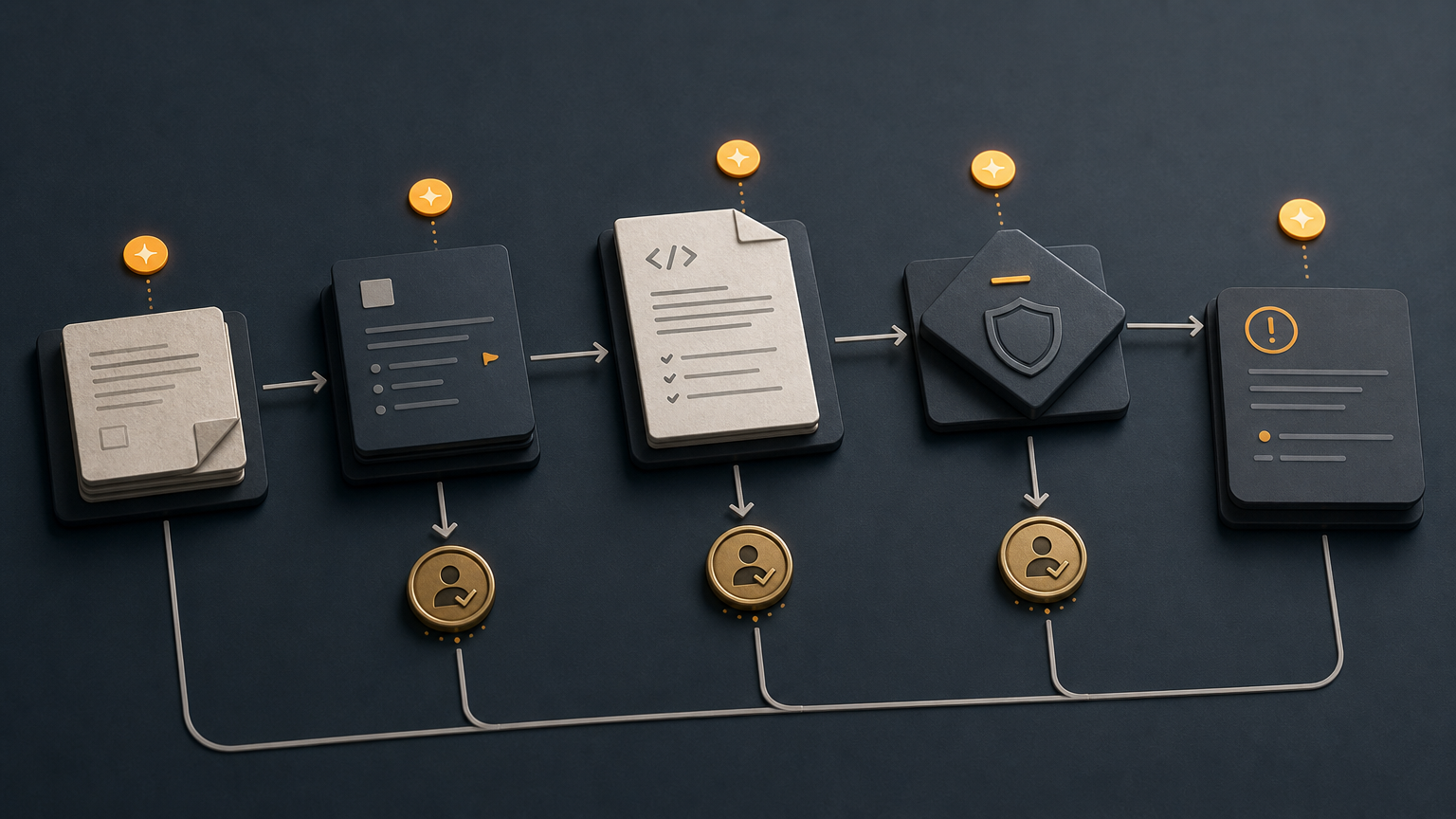
The policy may be behind the workflow
AI assistance can enter ordinary work long before an organization has settled on a formal policy. A draft issue may be summarized, a technical document may be reorganized, a customer theme may be synthesized, or an operational update may be prepared under normal delivery pressure.
That creates a practical leadership problem. A policy may require review of AI-assisted work, while the organization cannot reliably identify where AI contributed, what changed before approval, or who accepted the final result.
The central governance question is therefore not simply whether people use AI. It is whether the organization can apply appropriate controls when AI-assisted work affects a consequential decision.
AI can enter the workflow beyond code
Governance limited to code generation can overlook other places where AI assistance may influence decisions. Depending on the organization and its approved tools, AI may support work such as:
- Planning: preparing draft initiatives, requirements, or acceptance criteria.
- Work management: drafting, classifying, assigning, or summarizing work items.
- Development: assisting with code, tests, documentation, or review materials.
- Operations: preparing incident summaries, change notes, runbooks, or follow-up actions.
- Customer and commercial work: organizing feedback, drafting communications, or supporting prioritization.
These examples are workflow considerations, not universal categories or regulatory requirements. Their purpose is to help leaders look beyond a single tool or department.
A draft internal summary and a production change should not receive the same level of control. Nor should a system treat a suggestion as equivalent to an action that changes customer access, commits the business, or affects a security decision.
Use risk and reversibility to set review boundaries
A useful operating question is: What consequence follows if this AI-assisted output is wrong, incomplete, or based on the wrong context?
Four dimensions can help teams set proportionate review boundaries:
- Impact: Could the result affect customers, security, safety, legal obligations, finances, or access to systems?
- Reversibility: Can a qualified person detect and undo the result without material harm?
- Sensitivity: Does the workflow involve confidential, personal, regulated, or commercially restricted information?
- Authority: Does the output merely recommend an action, or can it initiate, approve, publish, merge, deploy, or otherwise cause one?
Lower-impact, reversible assistance may be handled through normal quality practices and appropriate disclosure. Higher-impact work may warrant a named human owner, evidence review, and explicit approval before it is acted upon.
This approach is generally more durable than a tool-by-tool policy list. Tools and features change quickly. The consequences of a decision usually change more slowly.
Human review must mean more than a click
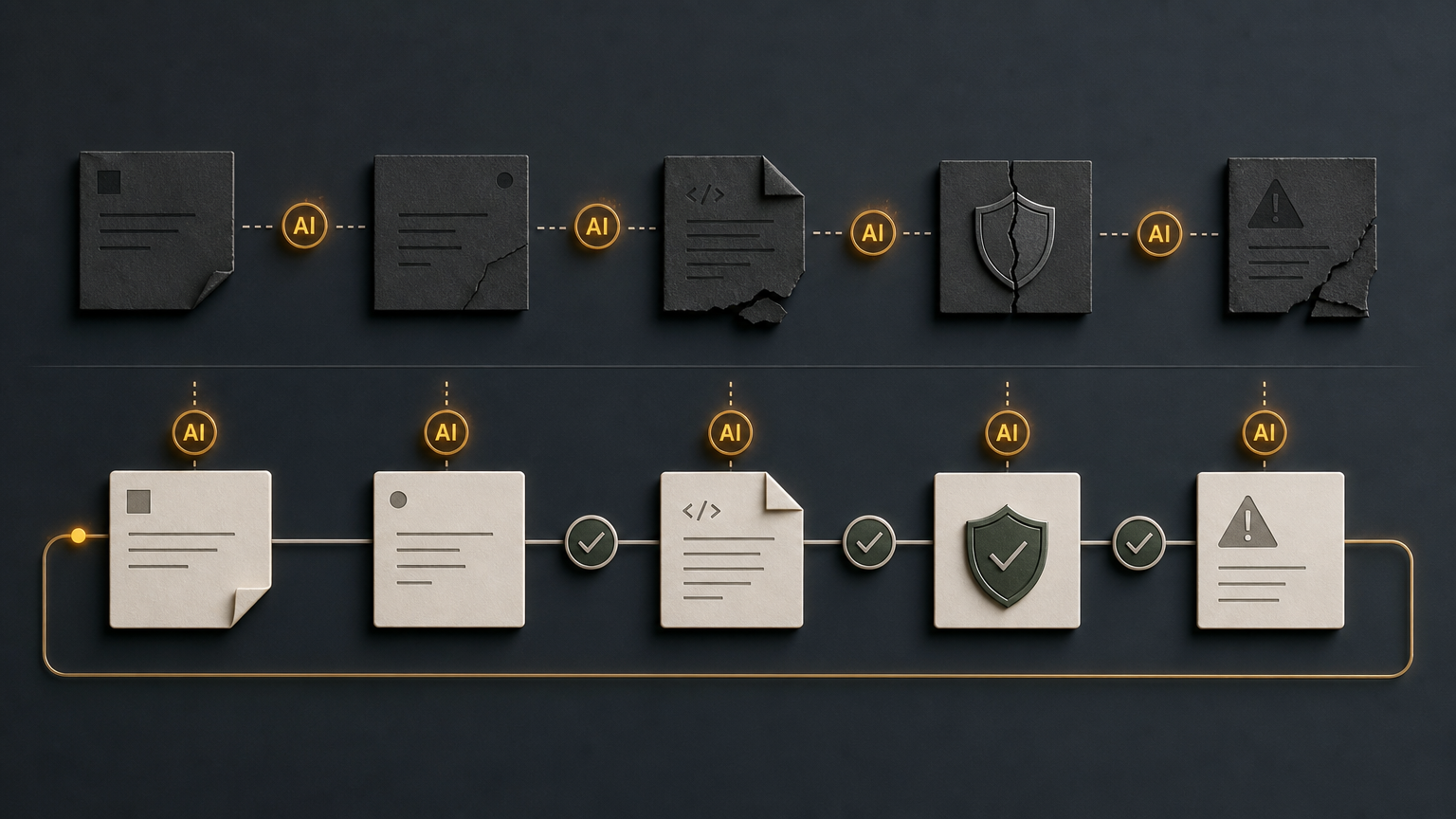
“Human in the loop” is not a sufficient control if it only means that someone pressed an approval button. Meaningful review should establish, in a proportionate way:
- who is accountable for the decision;
- what information or evidence was considered;
- where AI assisted with drafting, transformation, or summarization;
- what checks were performed; and
- what conditions would require escalation, correction, or rollback.
The depth of review should fit the risk. Approving a low-stakes internal draft is different from approving a customer-facing commitment or a security-sensitive change. In both cases, however, the responsible person should understand what they are accepting.
Documentation is part of the control
AI systems can make it easier to produce more drafts, summaries, and work artifacts. That does not automatically improve the quality of the decisions around them.
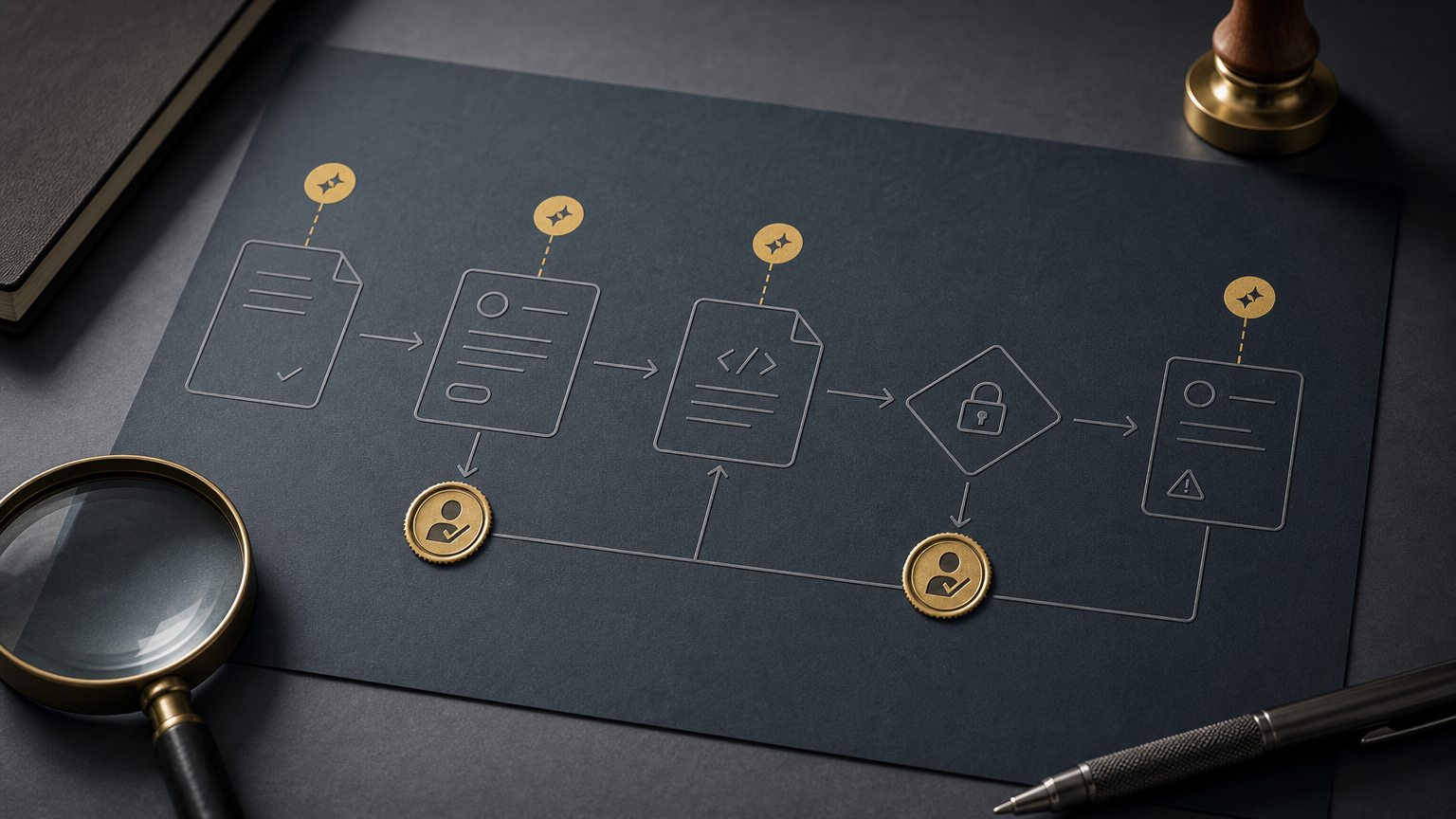
When requirements are ambiguous, key decisions are buried in informal messages, or exceptions are not recorded, faster output can amplify confusion rather than reduce it. The surrounding record matters because it gives reviewers the context needed to judge an output and revisit a consequential decision later.
For material work, a durable record can answer four questions:
- What was the intended outcome?
- What information informed the decision?
- Where did AI assist, and what did the reviewer change, reject, or validate?
- Who approved the result, under what standard, and when?
This does not require a forensic transcript for every low-risk draft. It does require enough context to reconstruct consequential decisions without relying on memory or scattered informal communications.
Measure behavior, not policy compliance alone
A policy is useful only when leaders can compare it with how work is actually performed. An internal review can examine signals such as:
- where AI-assisted activity appears by workflow stage;
- whether material work moves from draft to review to approval with a clear owner;
- whether sensitive information enters approved workflows;
- whether corrections, reversals, or escalations reveal recurring weaknesses; and
- where documented policy differs from observed practice.
Usage volume is not proof of either success or failure. High usage may reflect useful assistance, weak boundaries, or both. Low recorded usage may mean that relevant work occurs outside the systems being observed.
The more useful question is whether leaders can see enough of the workflow to manage the risks they are responsible for managing.
A practical starting point
Start with a short workflow review rather than a blanket prohibition or an overly broad approval process.
Choose one product-development path and one operational path. Trace the points where AI may draft, summarize, classify, recommend, or contribute to an action. For each point, consider the impact, reversibility, sensitivity, and authority involved. Then define the accountable decision-maker and the record needed for material outcomes.
Finally, compare that design with actual practice. If the organization cannot identify where AI-assisted decisions enter the workflow, the immediate control problem is visibility—not a lack of policy language.
The objective is not to treat every use of AI as exceptional. It is to make sure that consequential work remains understandable, reviewable, and owned by a responsible person.