
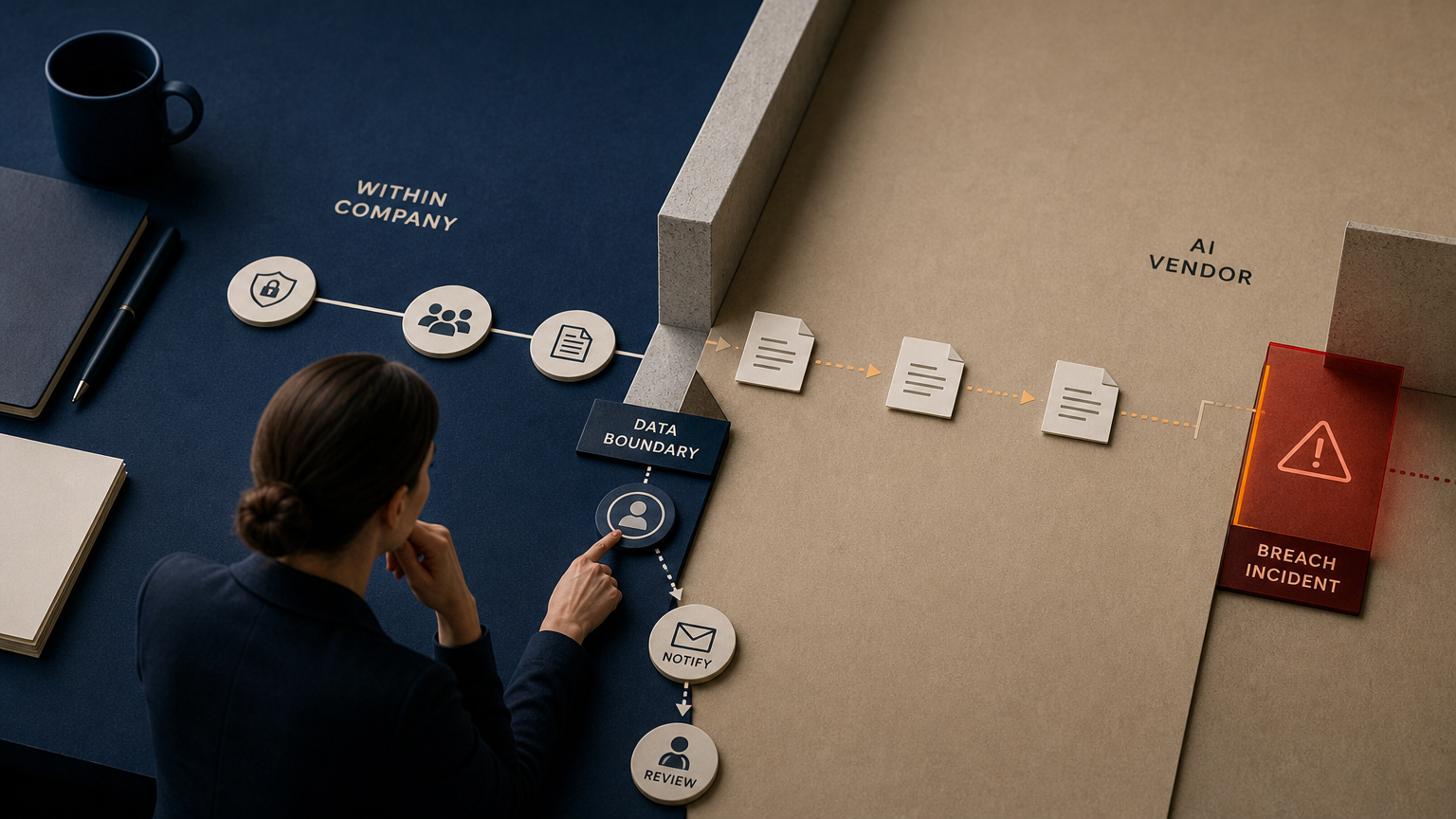
The breach does not need to be inside your environment
An AI or operations owner may hear that an external model provider was compromised and conclude that their own systems were not breached. That conclusion is too narrow.
If company data, prompts, transcripts, identifiers, credentials, or operational metadata crossed into the provider’s environment, the incident can still become a customer, privacy, security, and trust problem for the company that chose the integration.
The practical question is not only, “Who was breached?” It is also, “Who must determine the impact, protect customers, and explain what happened?”
The Fireworks AI incident involving Notion offers a useful case study. In its security incident notice, Notion said that fewer than 1% of its workspaces may have been affected. It said some unattributable Notion AI chat sessions may have been exposed, while no other data from affected workspaces was affected according to its investigation.
That combination matters: a third-party incident, a limited but potentially sensitive data set, and a downstream company responsible for investigating and communicating the impact.
What the Notion notice establishes
The notice says Notion used Fireworks for classification jobs connected to its Insights feature and as an inference provider for open-weight models inside its product. Notion said it disconnected its systems from Fireworks, deleted data in the Fireworks system, stopped sending data and traffic to Fireworks, and halted training runs as of November 3.
Notion also said Fireworks notified it on November 6 that malicious actors may have accessed potential customer data. On November 8, Fireworks confirmed a new dataset for Notion, which Notion then analyzed.
The affected material was described as unattributable chat transcripts. According to Notion, the transcripts were not labeled with the author or workspace, did not contain tool call results, and did not include information tying them to a specific workspace, user, or company beyond the words in the transcript itself.
Notion said affected workspaces represented fewer than 1% of its workspaces. It contacted affected workspace owners and provided different review resources depending on the plan type. It also recommended treating the data as exposed and rotating passwords, API keys, or other credentials if people had pasted them into Notion AI during the relevant period.
These are the incident-specific facts. They should not be generalized into a claim that every AI vendor breach has the same scope or customer impact.
The downstream company still owns the response
“Ownership” has several meanings, and confusing them creates weak incident handling.
The external provider may own the original compromise, its infrastructure, and the evidence about what happened there. A contract may determine indemnification, notification deadlines, or financial responsibility. Regulators or customers may later assess responsibility differently.
But the company that placed the AI dependency in a customer-facing workflow generally owns the downstream operating decisions:
- determining what data was sent to the vendor;
- deciding whether to suspend, restrict, or replace the integration;
- identifying potentially affected customers or users;
- preserving the internal incident record;
- coordinating legal, security, product, support, and communications teams; and
- explaining known facts, uncertainty, and recommended action to customers.
That is not an admission that the company caused the incident. It is an acknowledgment that customers experience the risk through the company they know and use.
Five controls to examine before an incident
1. Define the data boundary
Maintain a current, reviewable account of what each AI provider can receive. “Prompts” is not a sufficient category. The boundary may include chat text, attachments, retrieved content, tool outputs, identifiers, account metadata, logs, feedback, evaluation data, and training or improvement data.
For each integration, answer four questions:
- What is sent?
- Why is it sent?
- How long is it retained?
- Can the provider use it for training, evaluation, abuse monitoring, or other purposes?
The Notion notice distinguishes chat transcripts from tool call results and says no other workspace data was affected. That distinction is exactly the kind of boundary an incident team needs to reconstruct quickly.
2. Make vendor notification duties testable
A contract should do more than require the vendor to report a “security incident.” It should define what triggers notice, how quickly notice must occur, what initial facts are required, how updates are delivered, and who can answer technical questions.
Useful requirements may cover:
- prompt and credential exposure;
- unauthorized access to logs or training data;
- subcontractor or infrastructure-provider incidents;
- evidence preservation;
- deletion and containment confirmation;
- cooperation with customer notification; and
- a clear escalation path outside normal support channels.
The Notion timeline shows why timing and data quality matter. A first notice about possible access is not the same as confirmation of the affected dataset. The customer needs both an immediate containment path and a process for refining the facts.
3. Preserve an incident record that separates fact from assumption
Record the vendor’s notices, internal decisions, data-flow diagrams, affected integration versions, access changes, customer assessments, and communications.
Label each item as confirmed, reported by the vendor, under investigation, or disproven. Do not allow a vendor’s preliminary statement to become an internal fact merely through repetition.
The record should also preserve what was not affected, when that conclusion was reached, and what evidence supports it. Negative findings are important to customers, but they should remain tied to the scope of the investigation.
4. Design customer communication around action
A useful notice answers four questions:
- What happened?
- What information may be involved?
- Who may be affected?
- What should the recipient do now?
Notion’s notice illustrates several practical choices: it described the scope as fewer than 1% of workspaces, explained what “unattributable” meant, contacted affected workspace owners, made affected data available for review, and recommended rotating credentials that may have been pasted into the product.
The communication standard should be proportional and precise. Do not minimize an incident because data lacks attribution. A transcript can contain sensitive information even when it cannot be tied to a named account. Do not overstate exposure either. Say what the investigation supports, what remains uncertain, and when the next update will be provided.
5. Make revocation and recovery part of the integration design
When an AI provider is compromised, the response may require more than disabling one API key. The operator should be able to identify and restrict the relevant traffic, credentials, service accounts, data stores, model routes, training jobs, and administrative access.
The goal is controlled containment: stop additional exposure while preserving enough evidence to understand the incident. If credentials or secrets may have appeared in prompts or transcripts, assess and rotate them according to their sensitivity and use—not only when the vendor confirms that a particular secret was read.
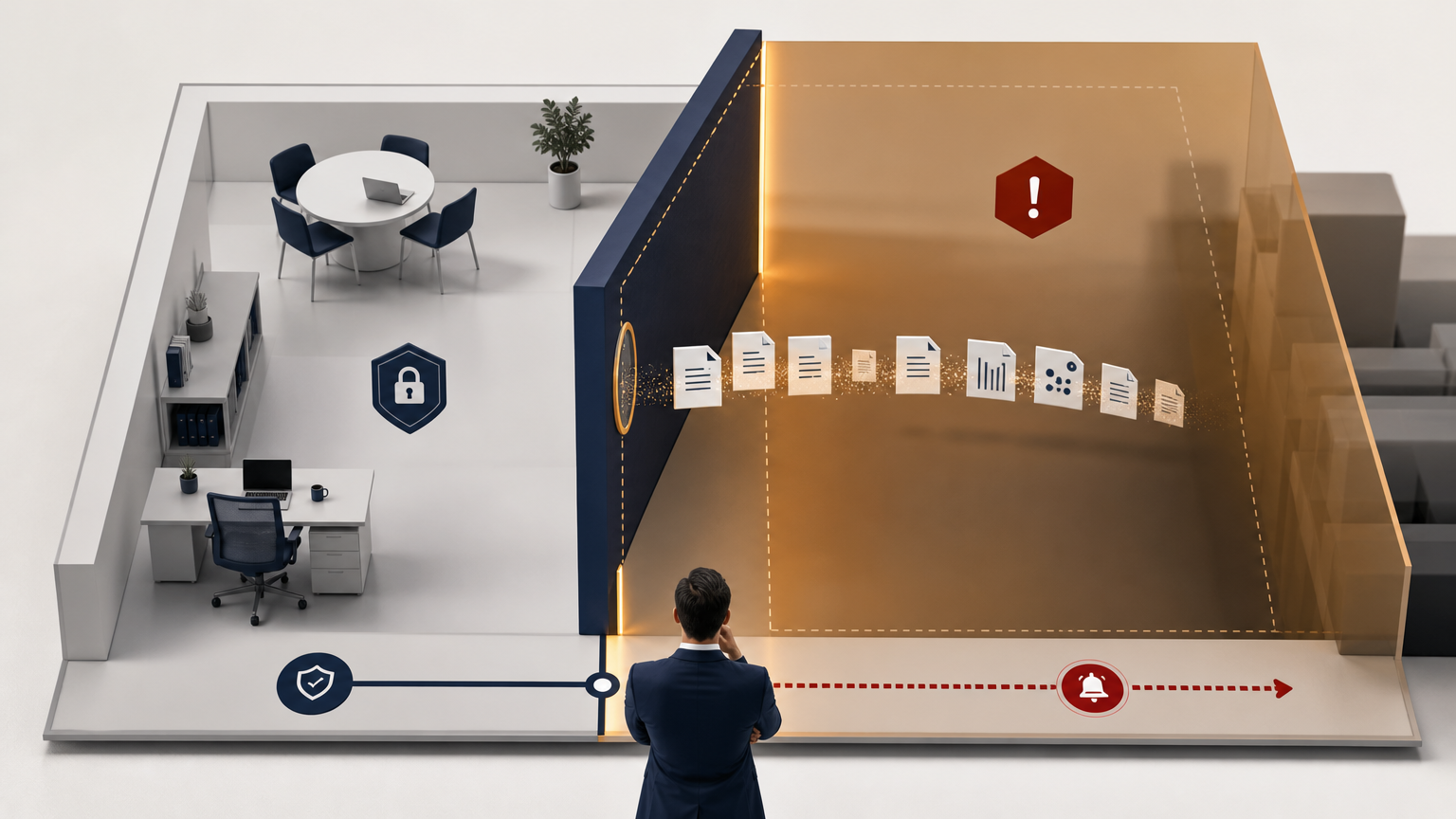
A practical decision sequence for the first review
When a provider reports an incident, an AI or operations owner can structure the first review around these decisions:
Contain. What connections, data flows, jobs, or credentials should be paused immediately? What customer-facing functionality depends on them?
Scope. Which products, tenants, environments, time periods, models, regions, and data categories were involved? Does the provider’s evidence answer those questions, or are there gaps?
Assess. Could the exposed material include secrets, regulated data, confidential business information, personal data, or content that creates a customer-specific risk even without attribution?
Notify. Which internal teams need the facts now? Which customers, users, partners, or authorities may need notice? Who approves the wording?
Recover. What must be rotated, deleted, disabled, rebuilt, or independently verified before the integration returns?
Learn. What control failed: vendor selection, data minimization, contract language, monitoring, access management, customer notification, or executive ownership?
This sequence is intentionally a governance frame rather than a technical recipe. Each organization must adapt it to its legal obligations, data sensitivity, service design, and incident-response process.

What remains uncertain
The supplied notice does not establish every detail an enterprise buyer may want to know. It does not provide the full vendor forensic report, the exact incident window, the complete population of potentially exposed transcripts, or the contractual allocation of costs and liability between the companies.
It also does not establish that every customer using Fireworks, Notion, or another AI provider would face the same exposure. The facts depend on the particular integration, data path, retention settings, incident scope, and customer configuration.
That uncertainty is not a reason to wait for perfect information. It is a reason to use staged decisions: contain first, document the evidence, communicate what is known, and update the assessment as facts improve.
The operating principle: accountability follows the customer relationship
A third-party AI provider can be the source of the compromise without being the only party accountable for the customer experience.
The company that selected the provider controls the integration boundary, the product context, and often the customer communication channel. It should therefore be prepared to demonstrate that it knew what data was leaving its environment, could stop the flow, could determine who might be affected, and could explain the result without hiding behind vendor language.
For AI owners, this is the central governance test: if a provider cannot give you enough evidence to assess customer impact, you do not have a manageable dependency—you have an unresolved risk.
A useful next step
Choose one external AI integration that handles business knowledge or user-generated content. Review its data boundary, vendor notification terms, access-revocation path, incident evidence requirements, and customer communication owner.
Then ask a simple question: if the provider reported a compromise tomorrow, could your team identify affected data and customers without first rebuilding the integration from memory?
If the answer is no, that gap is a practical starting point for a governed AI review with SimplSolutions.