

The risk is not limited to the model
An AI workflow may have carefully designed prompts, restricted data access, and clear approval rules, yet still depend on software that can affect its data, credentials, tools, or host environment.
That software may include SDKs, gateways, orchestration libraries, connectors, deployment images, and build-time tooling. Each dependency expands the system that operators need to understand.
The relevant question is broader than whether a model follows policy. It is also whether the surrounding software artifacts are identifiable, appropriate for their intended role, constrained by sensible permissions, and observable in operation.
This does not mean every team must inspect every line of every dependency. It means critical dependencies deserve a proportionate trust assessment, especially where they can access production credentials, customer data, source code, or connected systems.
Establish artifact identity and provenance
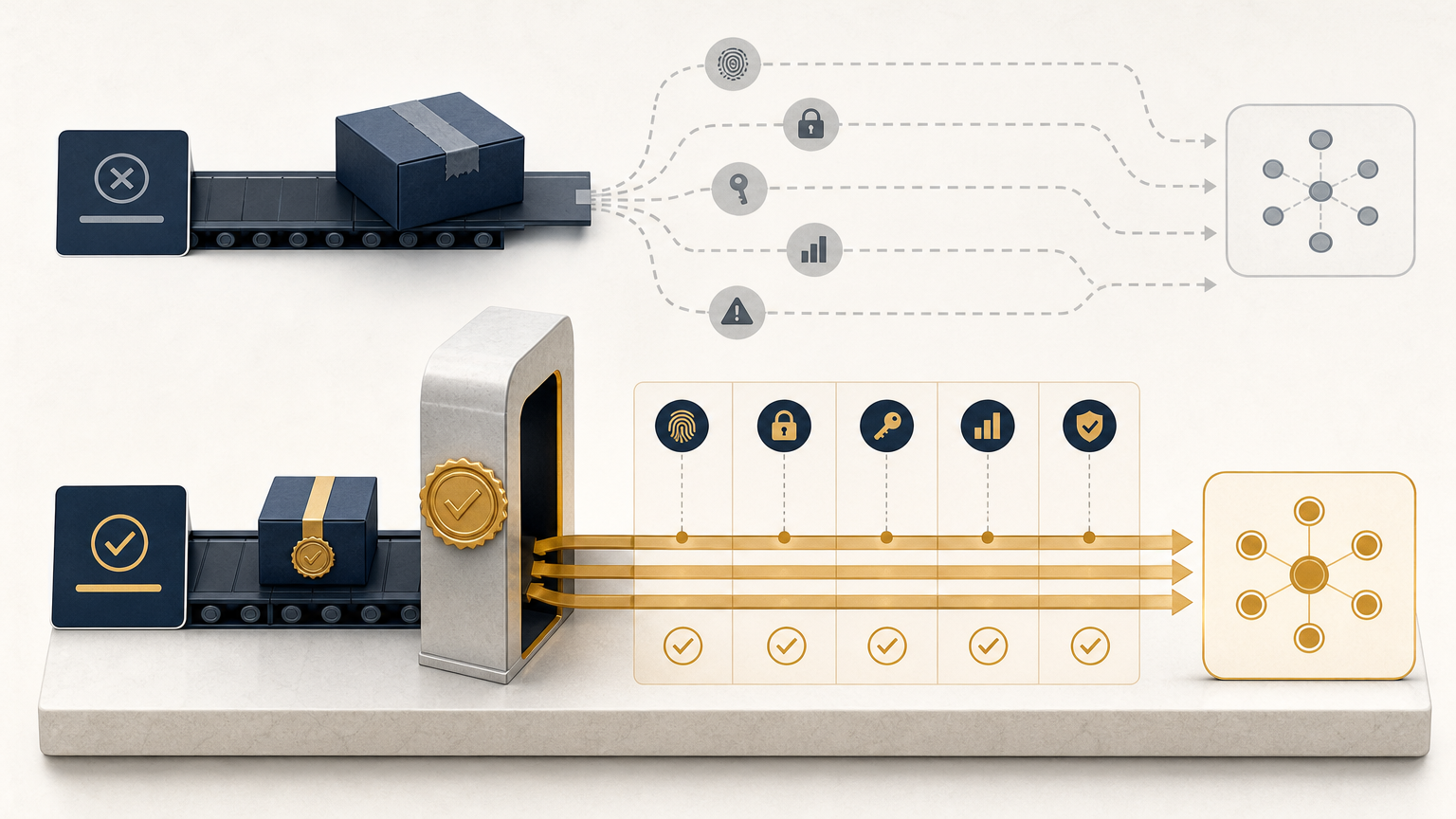
Start with the artifact actually entering the environment: package name, version, distribution type, digest where available, registry or mirror location, and acquisition time. A lockfile or image tag can help with repeatability, but it is not a complete description of provenance.
Useful evidence may include release metadata, signed artifacts where available, software bills of materials, build attestations, change records, and comparisons between reviewed source, packages, and deployed images. The appropriate evidence will vary by ecosystem and risk level.
A practical decision question is: can the team explain what this artifact is, where it came from, and why it is suitable for the change being deployed?
Review unexpected additions
Changes deserve closer attention when they introduce new executables, startup hooks, native extensions, installation scripts, background services, or network-facing components. These additions are not inherently unsafe, but they can materially change a dependency’s authority and behavior.
For high-impact dependencies, teams can consider recording approved artifact identifiers and reviewing meaningful differences before promotion. This provides a clearer basis for rollback and investigation if concerns arise later.
Constrain runtime authority
A dependency’s practical impact depends partly on what it can access after installation. Review code that may run before or outside an application’s main business logic, such as install hooks, interpreter startup files, entry points, container entrypoints, scheduled tasks, and background processes.
Where appropriate for the environment, give a critical dependency only the permissions needed for its stated function. Avoid exposing unrelated host credentials, source-control tokens, cloud administration identities, browser profiles, or project data to a service that does not require them.
These are adaptable design considerations, not universal deployment rules. A team’s implementation should account for its operating environment, service requirements, and recovery capacity.
Separate identities by purpose
Build, deployment, production, and developer identities can be separated and narrowly scoped where practical. This can reduce the consequences of a compromised environment reaching credentials intended for another purpose.
Operators should understand which identities are accessible from an AI workflow’s process, container, host, database, and automation path. They should also know which of those identities could access sensitive data, change infrastructure, or publish software.
Observe behavior that matters
Dependency assessment continues after deployment. Establish an expected baseline for network destinations, child processes, file access, credential use, and outbound data patterns that are meaningful for the workload.
Potential review signals may include unexplained network activity, new persistent processes, reads of sensitive credential locations, unexpected access to process environments, unusual archive creation, or access attempts involving cloud metadata services. A signal is not proof of compromise; it is an input for investigation in context.
Monitoring is most useful when it has an owner and a decision path. Teams should be able to distinguish normal operational variation from behavior that warrants isolation, rollback, or further analysis.
Make permissions observable
Documenting why a workload has a permission can make anomalies easier to identify. For example, a service may have a documented need to call a specific model endpoint but no expected need to access repository credentials or unrelated host files.
Permissions that are observable and revocable can support both routine governance and incident response.

Prepare a containment path
Before a critical dependency reaches production, define who can act and what information they need. A response plan can begin with four questions:
- Which environments and artifacts may have received the dependency?
- Which credentials and data could the affected process access?
- How can the artifact be isolated, removed, or rolled back?
- Who can authorize credential changes, communications, and recovery?
For a suspected software supply-chain event, preserve relevant logs and artifact records before rebuilding where feasible. Identify potentially affected hosts, images, workstations, and automation jobs. Then assess access to credentials and data based on the environment’s actual configuration.
Removing a package can be an important containment action, but it does not by itself establish what occurred before removal. Containment, evidence preservation, credential response, and recovery are related but distinct activities.
A layered trust decision
A critical dependency can be assessed through six related layers:
- Identity: Is this the intended package, image, version, and artifact identifier?
- Provenance: What evidence describes how it was built and published?
- Behavior: Does its observed function align with its intended role, including at startup?
- Authority: Are credentials and runtime permissions appropriately limited?
- Observability: Would unusual access or communication be visible to the right people?
- Recovery: Can the team isolate the workload and respond to exposed access quickly?
This framework complements model evaluation, prompt governance, and data controls. Trust in an AI system depends on the model and on the software environment that connects the model to data, tools, and operational authority.
The practical next step
Choose one AI workflow that handles meaningful business data or production credentials. Map its dependency versions, artifact sources, runtime permissions, accessible identities, outbound connections, and response owner.
Then identify the control gap that would make an unexpected dependency change hardest to detect or contain. Addressing that gap can improve the resilience of the workflow without requiring a complete redesign.