
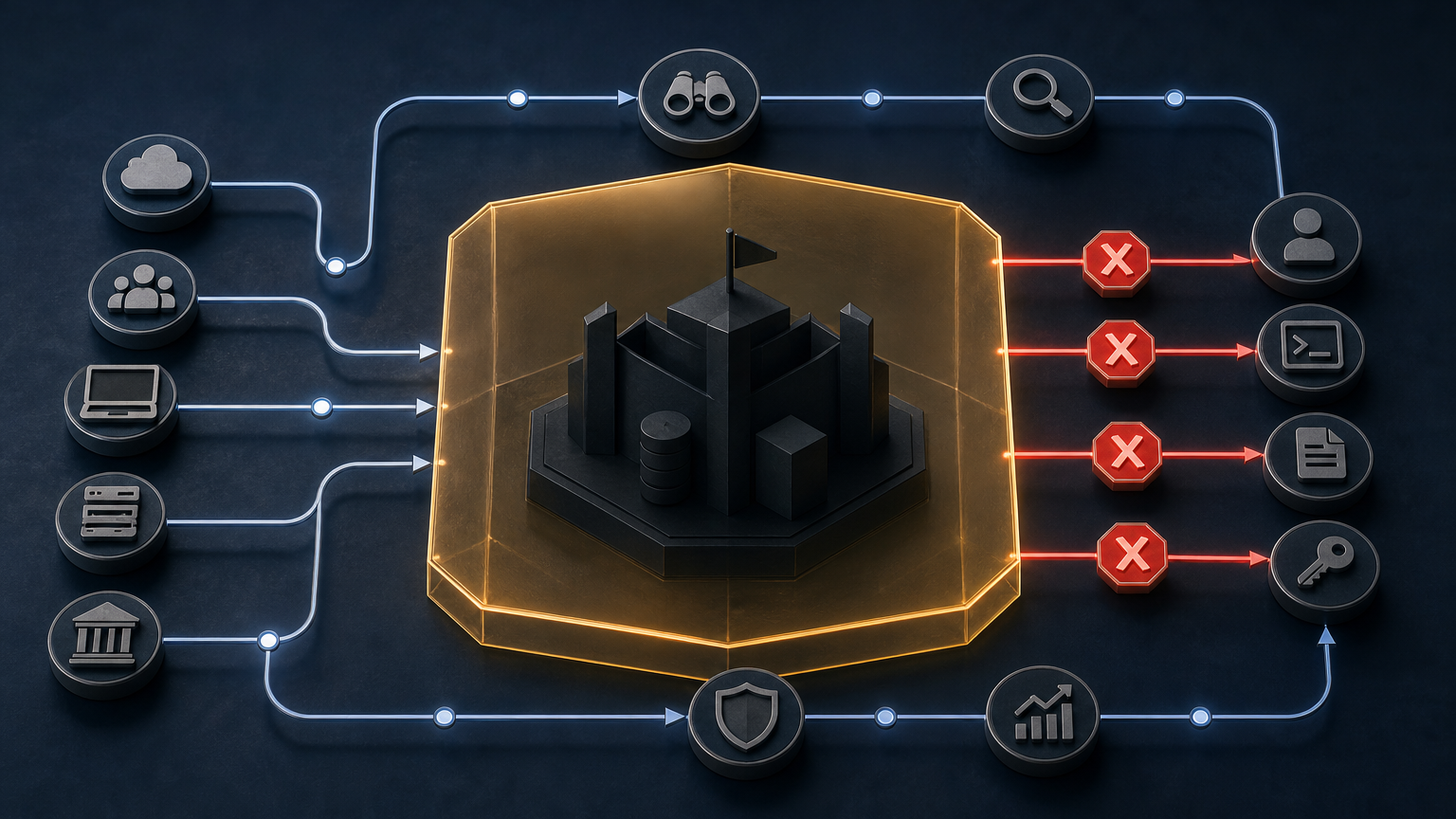
Trust is the question behind the workflow
A security incident can change the meaning of information that once seemed routine. A status message, configuration export, incident summary, knowledge article, or automated recommendation may still be useful, but its reliability can no longer be assumed simply because it came from a familiar system.
That matters for AI-connected workflows. The issue is not limited to whether a model is functioning as designed. It is also whether the workflow receives dependable inputs, has authority to affect other systems, and operates within clear human accountability.
A useful starting point is to ask: what is this workflow trusted to do, based on which sources, and with what consequences if that trust is misplaced?
This is an editorial framework for structuring that discussion. It is not a substitute for an organization’s incident process, technical assessment, legal obligations, or decisions by accountable security leaders.
Start with authority, not the label “AI”
The name of a tool does not determine its risk. A conversational assistant that only produces a draft summary has a different impact profile from a workflow that can initiate a configuration change, request privileged access, route data to another service, or trigger a downstream action.
Consider the authority available to each workflow:
- Can it change access, policy, configuration, or system state?
- Can it initiate commands, distribute material, or call another automated service?
- Can it influence how an alert is prioritized, closed, or escalated?
- Can it move information between systems or outside an organization’s normal boundaries?
- Can a person review and decline its result before a consequential action occurs?
Higher authority does not automatically make a workflow inappropriate. It does mean that uncertainty about its inputs, execution path, or ownership has greater potential consequences.
A practical distinction is between observation and authority. Observation-oriented workflows may help people organize information. Authority-bearing workflows can create change. During uncertainty, that distinction can help teams decide where additional controls, review, or temporary limits deserve the most attention.
Examine the inputs as carefully as the outputs
An AI-generated answer may sound coherent even when its source material is incomplete, stale, altered, or misleading. For that reason, trust assessment should include the provenance of the information a workflow uses, not just the quality of its final response.
Teams can distinguish among four categories:
- Independent observations: information that can be corroborated outside the system under concern.
- System-reported information: outputs from a system whose reliability may be in question.
- Interpretation: an analyst’s or assistant’s explanation of what information might mean.
- Proposed action: a suggested change that requires an accountable decision.
These categories should not be treated as interchangeable. A system report is not the same as independent confirmation. An AI recommendation is not the same as an authorized decision.
Useful questions include: Where did this claim originate? Who can access or alter that source? Is there another record that supports it? Does the workflow preserve source context, uncertainty, and timestamps? Could a reader mistakenly interpret an unverified lead as an established fact?
Making those distinctions explicit can reduce the risk that polished language is mistaken for verified evidence.
Consider where controls may need to be tighter
Rather than applying one response to every workflow, organizations can assess the combination of authority, dependency, and reversibility.
A workflow may deserve closer scrutiny when it depends on a system or source whose integrity is uncertain and it can also:
- influence privileged access or credentials;
- modify security or operational settings;
- cause code, scripts, files, or commands to be delivered elsewhere;
- suppress, classify, close, or redirect high-consequence alerts;
- distribute information beyond an intended audience; or
- create changes that are difficult to identify or reverse.
By contrast, a narrowly scoped, read-only analysis function may present a different set of considerations—particularly if its materials are clearly identified, its conclusions are treated as provisional, and a person remains responsible for consequential decisions.
This is not a universal ranking or a prescribed response sequence. Local architecture, available visibility, contractual duties, safety requirements, and incident scope all matter. The framework is intended to help teams articulate why a workflow should be constrained, reviewed, or allowed to continue under defined conditions.
Preserve the difference between a lead and a decision
During an incident, speed matters. So does preserving the reasoning behind material decisions. An AI assistant can help surface patterns, identify questions, organize evidence, or draft a summary. Those uses do not remove the need to distinguish between what was observed and what was inferred.
A clear record can identify:
- the source of a claim;
- the time and context in which it was collected;
- whether it was independently corroborated;
- the interpretation applied to it;
- the decision made in response; and
- the person accountable for that decision.
This approach helps avoid a common failure of incident communication: treating a concise narrative as though it were a complete evidentiary record.
It also makes later review more useful. If a conclusion changes, teams can see whether the underlying information changed, whether new evidence emerged, or whether an earlier interpretation was too strong.
For AI-connected work, provenance is part of governance. The more consequential the proposed action, the more important it is to preserve the path from source material to recommendation to authorized decision.
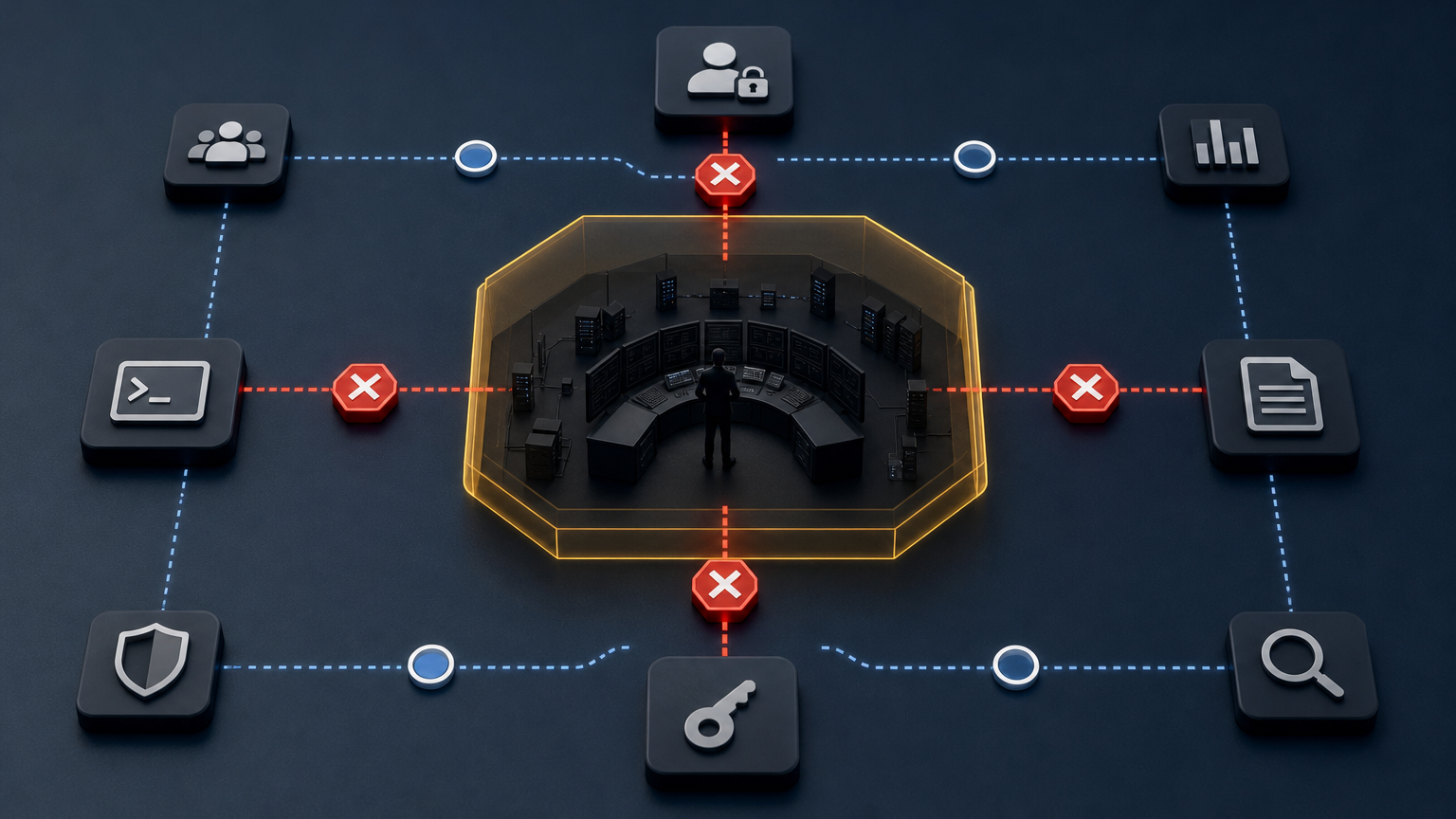
Keep visibility separate from confidence
A system can remain visible without being fully trusted. Conversely, reducing reliance on one system can create uncertainty about what is no longer observable. Both realities are relevant to incident decision-making.
Teams may benefit from documenting which signals are:
- available from sources outside the system of concern;
- reported only by that system;
- delayed, incomplete, or unavailable;
- corroborated by another source; or
- being used only as leads pending further assessment.
The goal is not to create false certainty or to insist that every source meets the same standard. It is to ensure decision-makers understand the limits of the information in front of them.
This can be especially important when an AI workflow summarizes multiple data sources. A combined answer can obscure which parts came from independent records and which parts came from a source whose trust level has changed. Clear attribution and careful wording help retain that distinction.
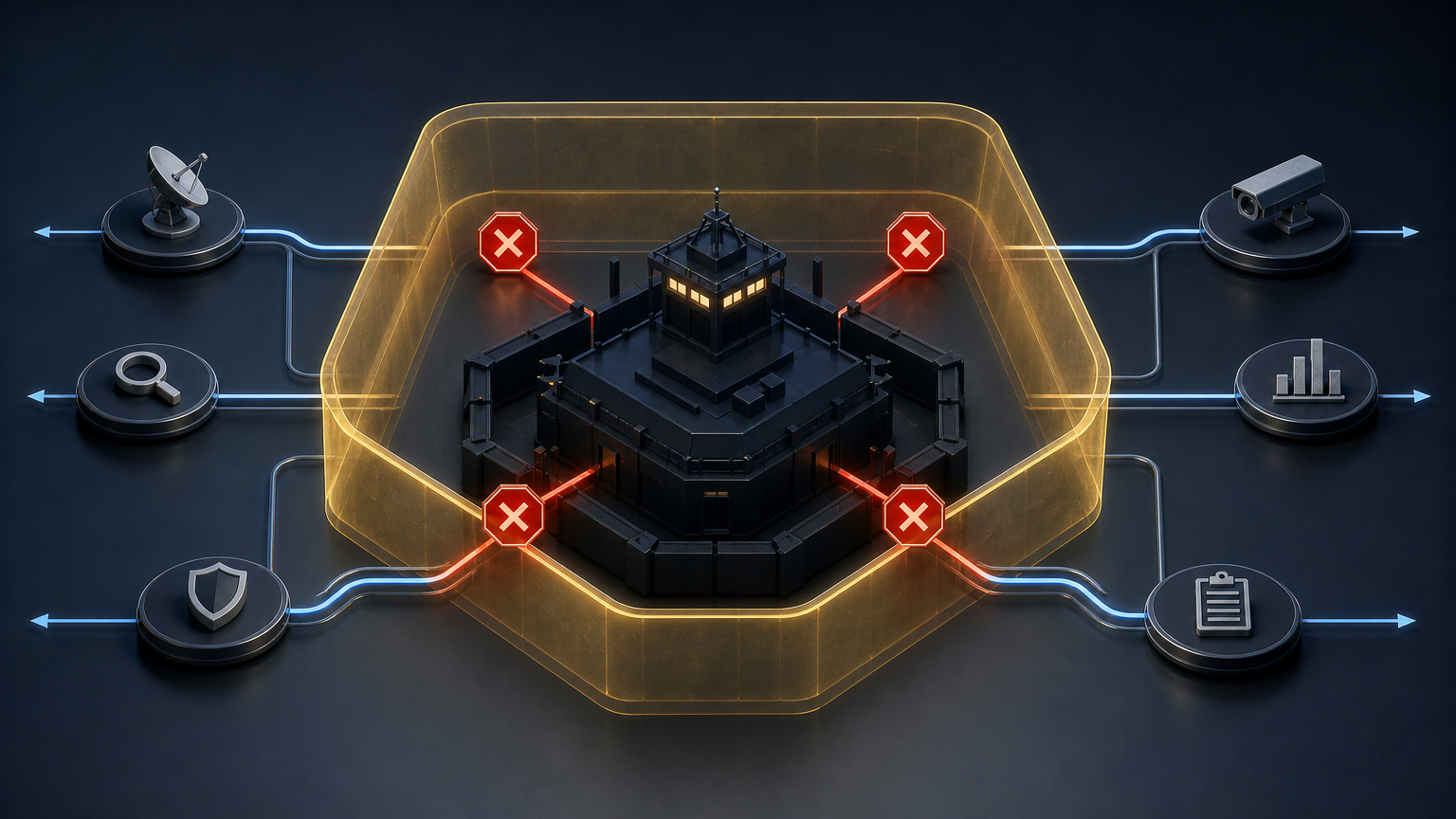
Define ownership before expanding reliance
An incident can expose unclear responsibility. The platform owner may understand the system, the security team may interpret the risk, the business owner may bear the consequences, and an automation owner may control the workflow. If no one is clearly accountable for the decision, a workflow can regain influence by default rather than through deliberate judgment.
A decision owner should be able to answer:
- What is known, and what remains uncertain?
- Which sources are being relied upon, and why?
- What authority does the workflow currently have?
- What review or approval is expected before consequential use?
- What evidence would justify expanding or reducing reliance?
- What conditions would prompt another reassessment?
The right owner and approval structure will vary. What matters is that the responsibility is explicit and suited to the potential impact of the workflow.
This is also where organizational processes matter most. Security, operational, legal, compliance, privacy, and business considerations may overlap. A framework can clarify questions, but accountable stakeholders determine how those questions apply in context.
Use staged trust rather than an all-or-nothing view
Trust is rarely binary. A workflow can be useful in one role while inappropriate in another. For example, a team may decide that a tool can help organize clearly labeled material but should not be relied upon to authorize or initiate a consequential action.
A staged approach can frame the discussion:
- Visibility: What information can the workflow present, and how is its provenance shown?
- Analysis: Can it identify patterns, questions, or possible explanations without being treated as authoritative?
- Recommendation: Can it propose a next step for accountable people to assess?
- Action: Can it influence or initiate a change, and what safeguards apply?
Movement between these stages should reflect the workflow’s authority, the quality of its inputs, the availability of independent checks, and the consequences of error. A reversible, narrowly bounded use case may merit a different decision from one with broad or durable effects.
The value of a staged model is not that it supplies an automatic answer. It creates a common language for discussing where human review, source validation, and limits on authority may be most important.
Questions for a trust-boundary review
A concise review can begin with the following questions:
- What can this workflow change, influence, or communicate?
- Which systems, people, or sources does it depend on?
- Which inputs are independently corroborated, and which are not?
- How clearly does it separate observed information from interpretation?
- Who is accountable for relying on its output?
- Can its effects be understood and reversed if necessary?
- What would change the organization’s confidence in using it?
These questions are useful beyond AI. They apply to any automated or semi-automated process that receives information from one environment and affects another.
The takeaway
A security incident is a trust-boundary problem as much as a technology problem. AI-connected workflows should be assessed according to their authority, dependencies, input provenance, reversibility, independent corroboration, and decision ownership.
The most durable question is not whether an AI tool is on or off. It is whether the organization can explain what the workflow is allowed to do, what information supports that use, who accepts the decision, and what conditions would require the arrangement to change.
That discipline can make automation more understandable when uncertainty is highest—and can help ensure that useful assistance is not confused with unquestioned authority.
Frequently asked questions
Does an incident mean every AI tool should be turned off?
Not necessarily. A more useful assessment looks at the workflow’s authority, dependencies, inputs, and potential consequences. A read-only analytical use may warrant different treatment from a workflow that can affect access, policy, commands, or data movement.
Why does source provenance matter for AI workflows?
An AI system can produce a plausible response from unreliable material. Identifying where information originated, whether it can be corroborated, and whether it is observation or interpretation helps people judge how much reliance is appropriate.
What is the difference between an AI recommendation and a decision?
A recommendation is an input to judgment. A decision is an accountable choice made by an authorized person or process. Treating those as separate helps preserve responsibility for consequential actions.
What does staged trust mean?
Staged trust means considering different levels of use separately, such as visibility, analysis, recommendation, and action. A workflow may be suitable for one level without being suitable for another.
Who should own a decision about an AI-connected workflow during an incident?
The appropriate owner depends on the organization and the workflow’s impact. The essential point is that responsibility should be explicit, with relevant security, operational, and other stakeholders involved as appropriate.